
In use, in development
ToolHub
The self-hosted foundation for your own in-house tools.
Sign-in, permissions, PDF, mail, import and updates are built once. A new tool only has to solve its own task.
What is ToolHub?
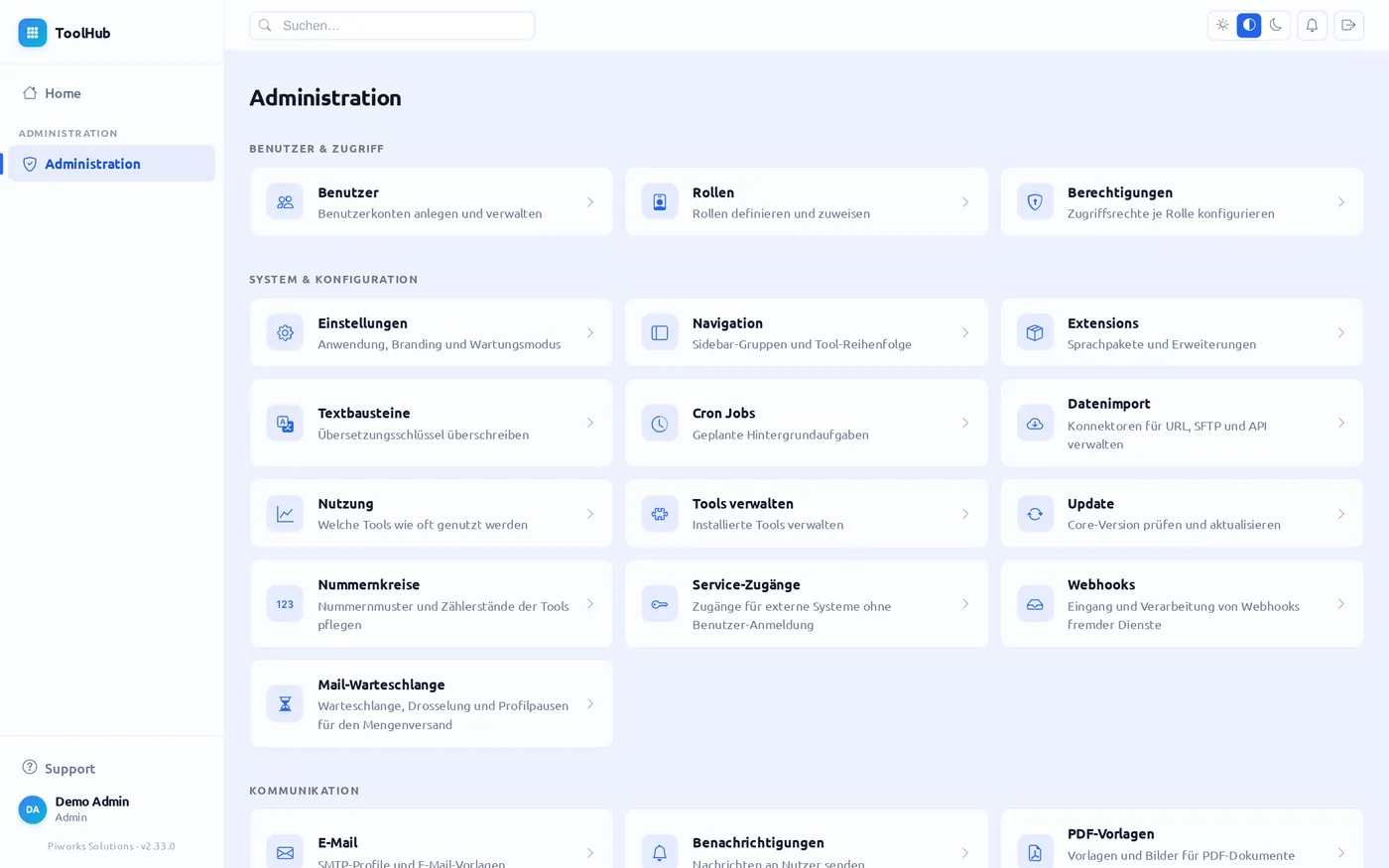
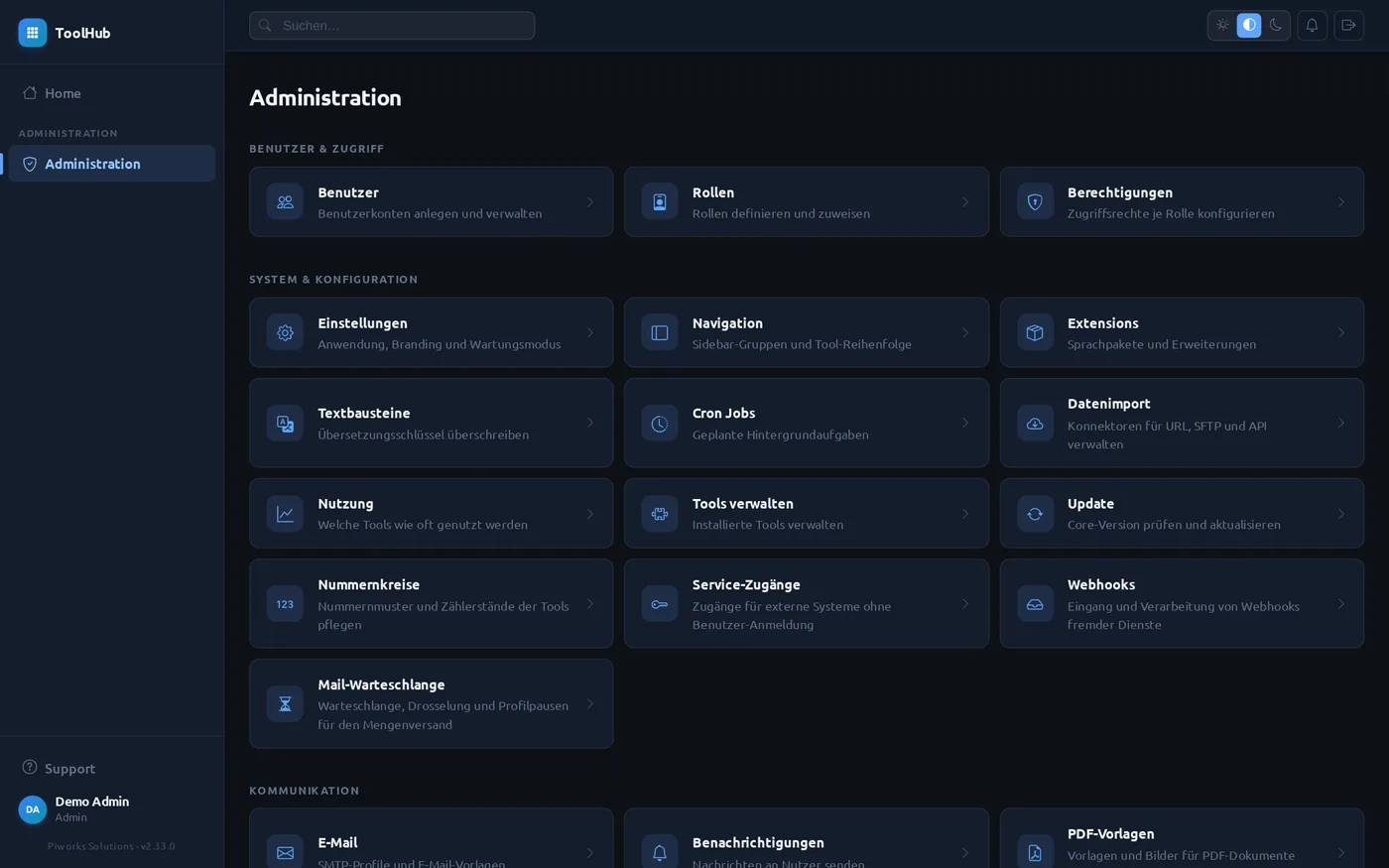
ToolHub is a web platform for your own server. It takes over what every internal application needs: users and roles, security, documents, mail, data import and updates. Small tools run on top of it, each for a single purpose, such as a shipping list, a voucher form or a customer overview.
Whoever builds a tool writes only that tool's own logic. Everything else comes from the core and is the same for every tool.
Structure
Core
The fixed foundation with sign-in, roles, mail, PDF, import, numbering and updates. It arrives as an update package and is never adjusted for a single customer.
Tools
Small modules on top of the core. A tool describes itself in a manifest (rights, settings, dependencies, tables) and does not reach into the core.
Instance
Every operator runs their own instance on their own server. There is no shared infrastructure and there are no tenants. The operator decides which tools run.
What the core provides
Sign-in and permissions
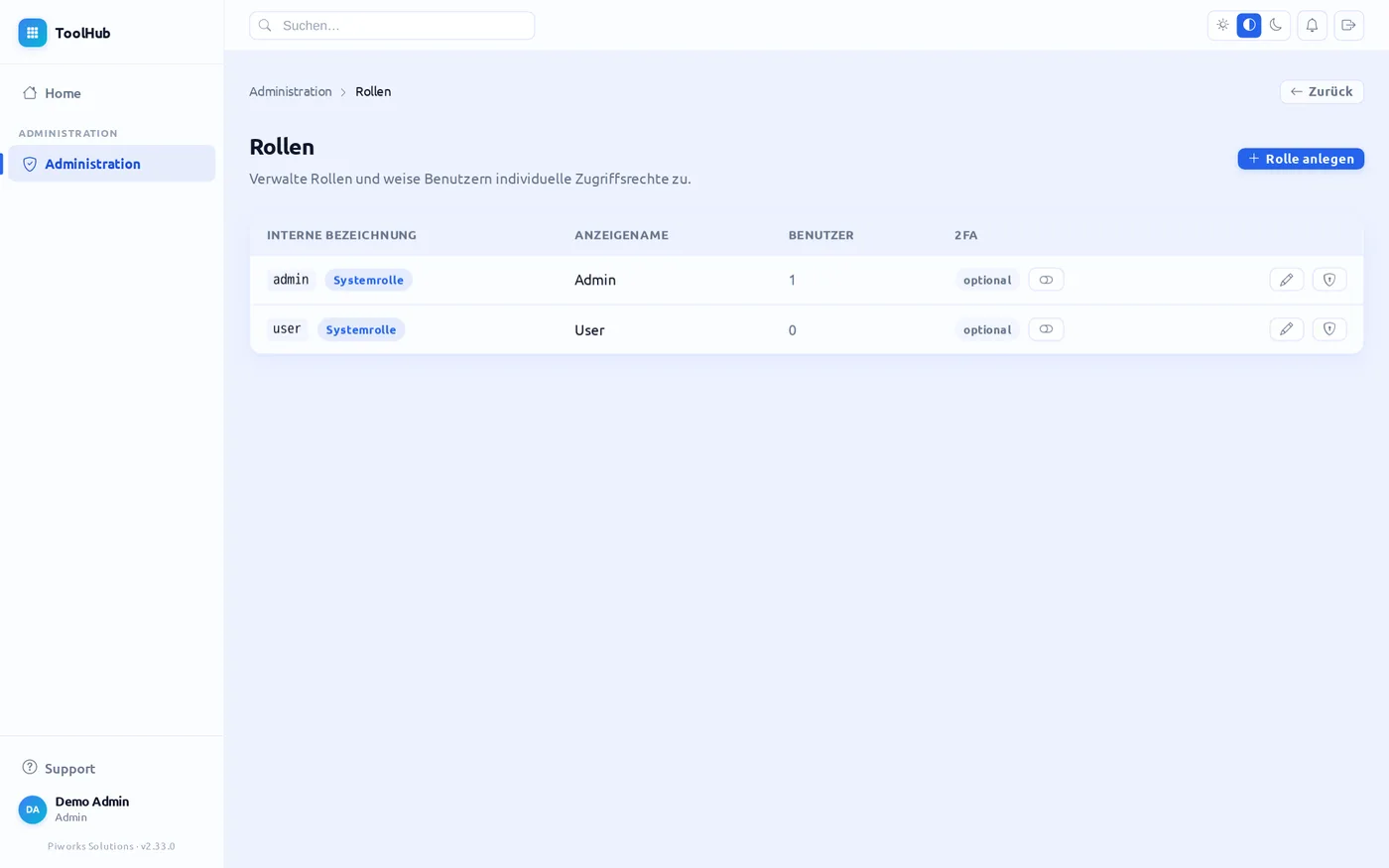
Every tool has its own permissions, which are assigned to roles. Sign-in works with an authenticator app or a passkey, and recovery codes are included. Two-factor authentication can be made mandatory per role. Protection against brute force and CSRF is built into the core.
PDF and documents
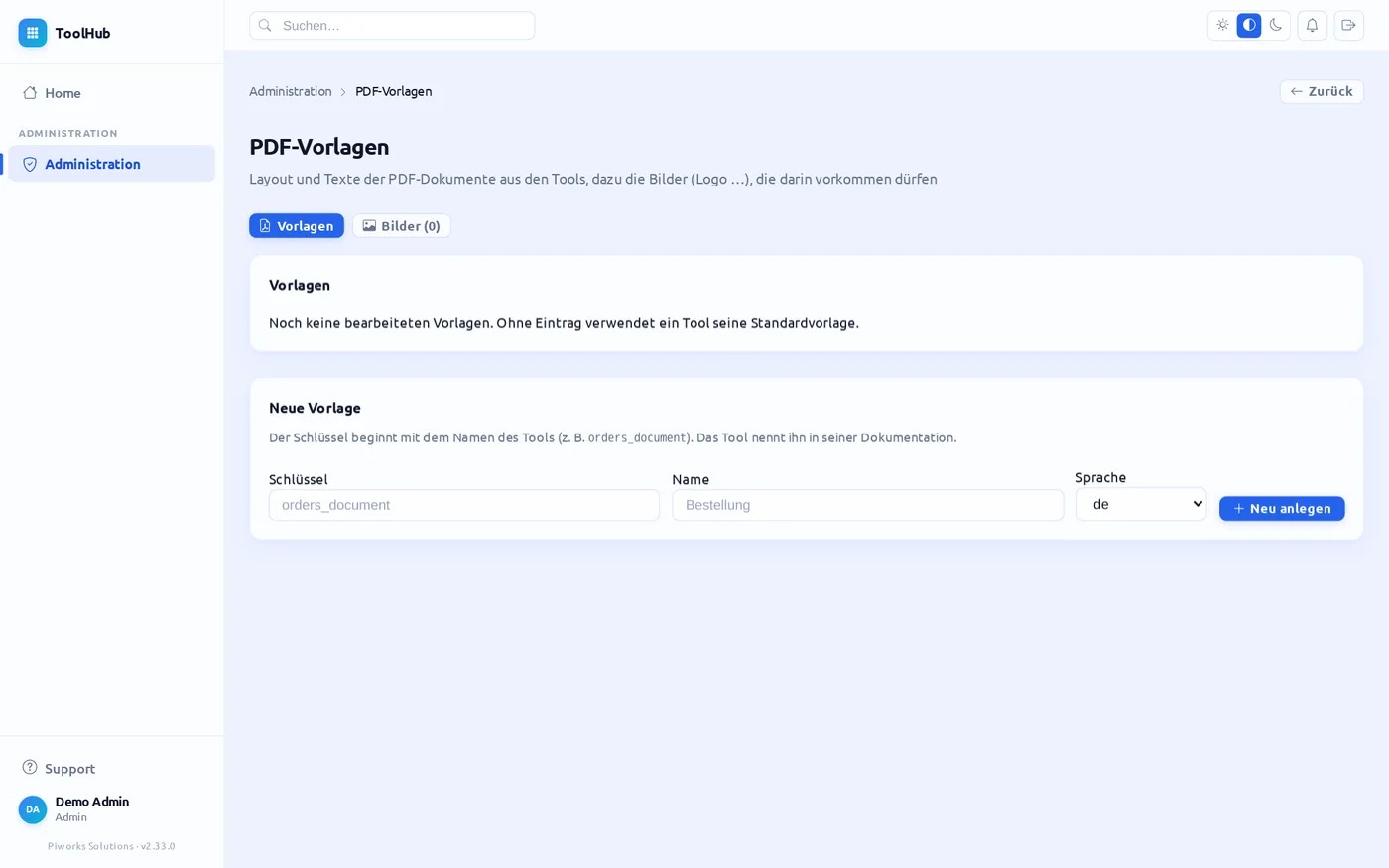
Tools create PDFs through one shared service. An administrator maintains layout, texts and images such as the logo as a template, separately per language, and the tool itself stays untouched. The core also supplies QR codes and number ranges.
Mail and bulk sending
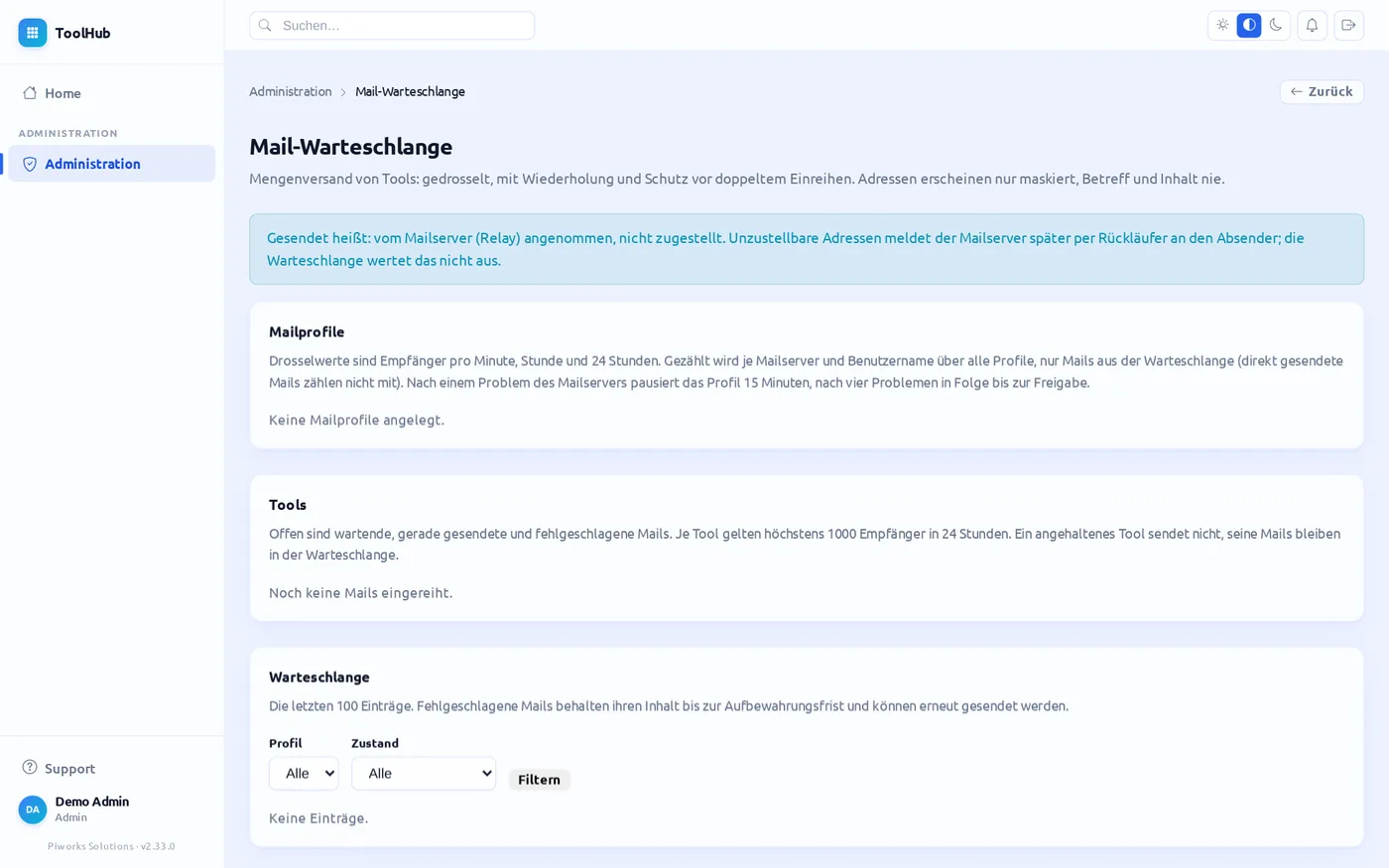
Mail profiles and templates are part of the core. For bulk mail there is a queue that throttles per minute, hour and day, retries failed mails and prevents duplicate queuing. If the mail server has problems, the profile pauses by itself. The log shows addresses only in masked form.
More building blocks
Data import
A tool can read data from files, web addresses, SFTP folders or interfaces. Fields are mapped, and an interrupted run continues where it stopped.
Interfaces
External systems such as a website or a shop connect through signed access. The core also receives webhooks from third-party services.
Updates
Core updates are installed in the admin area. The core verifies the checksum and can roll back if something fails.
Background jobs
Scheduled tasks run through cron. An overview shows which tools are used how often.
Languages
German and English are included, more language packs are possible. The operator can override any on-screen text.
Appearance
The interface follows the system theme, light or dark. Each user can change it individually.
Light and dark
The interface rests on its own small design system without a heavy framework. It works on the desktop and on the phone.
Technology
ToolHub runs on PHP 8.3 and MariaDB or MySQL. The frontend uses plain JavaScript without a build step. Installation is classic: files on the server and a database, no Docker needed. The core has automated tests, and every release goes through a security review.
Status
ToolHub is not available as a download in a shop. The core runs in production at several operators and grows with every release. If you want to run ToolHub yourself or build your own tools on it, write to us.